Waxed Hardwood Floors in 1970s Colorado Homes: What to Know
How Waxed Hardwood Ends Up in 1970s Colorado Homes
We do a wax-stripping job on hardwood once or twice a week, and it's almost always the same story: a homeowner in an older Front Range home wants that dull, cloudy hardwood looking clean and bright again, and what they're actually dealing with is decades of wax — not a modern finish at all.
The 1970s Shine Trend — Why So Many Homes Have It
Paste wax finish was simply the style for a long stretch of the mid-20th century. Homeowners liked the deep, glossy shine it produced, and it was a standard, widely-used product long before polyurethane finishes became the industry default. Homes built and finished through the 1950s, 1960s, and into the 1970s across our service area — Olde Town Arvada, Wheat Ridge, Applewood, Columbine, and similar older communities — were routinely finished this way, and many still have the original wax finish underneath decades of subsequent maintenance.
Why Didn't Homeowners Just Switch to Polyurethane Later?
Once a floor has a wax finish, converting it to polyurethane isn't a simple swap — it requires the old wax to be fully stripped first, since polyurethane won't bond properly over a waxed surface. For a lot of homeowners over the decades, the easier path was just to keep re-waxing rather than take on that larger project, which is exactly how so many original wax finishes have survived into 2026 largely intact.
What Happens When Wax Builds Up Layer After Layer
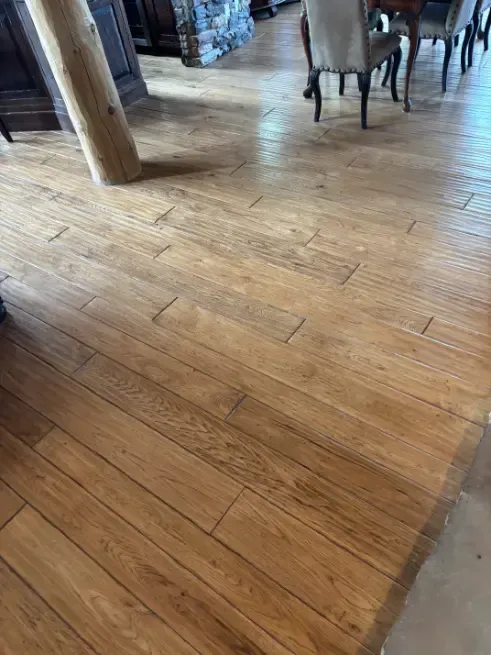
![[PHOTO PLACEHOLDER: Cloudy, dulled wax buildup on original 1970s hardwood before stripping]](https://assets.cdn.filesafe.space/MYF360ivYUNrrmLbTiiA/media/6a1cbab6d7322952d16cd6b0.webp "[PHOTO PLACEHOLDER: Cloudy, dulled wax buildup on original 1970s hardwood before stripping]")
You genuinely would think people back then would have known better than to keep layering wax indefinitely, but each new coat of wax goes on top of the last one rather than replacing it, and that buildup doesn't stay clear and glossy forever. Over years of reapplication, the wax layer thickens, yellows, and starts trapping dust and grime inside it rather than protecting the wood underneath. Eventually the floor just dulls out — no amount of buffing or another fresh coat brings back the shine, because the problem isn't a lack of wax anymore, it's too much of it, clouded and degraded past the point a new coat can fix.
Why Do People Wait So Long to Address It?
Most homeowners don't realize what they're looking at. A dull, cloudy hardwood floor reads as "old" or "worn out" rather than "needs the wax stripped," so a lot of people either live with it or assume the wood itself is damaged. In reality, the wood underneath is often in solid shape — it's the degraded wax sitting on top that's causing the cloudy, lifeless look.
Why We're Stripping Wax Almost Weekly Now
Identification always comes first — a water-drop test on an inconspicuous area tells us within seconds whether we're dealing with a waxed finish or polyurethane, since the two require completely different chemistry. Water beading on the surface means polyurethane. Water absorbing into the wood within seconds means wax. Once wax is confirmed, water-based cleaners are off the table entirely, since they strip the wax unevenly and leave a blotchy, damaged-looking result. Stripping wax correctly requires wax-compatible dry chemistry, applied and worked in a controlled process — not a wet mop, not a steam mop, and not the water-based products most consumer cleaning services default to.
Finish TypeWater-Drop Test ResultCorrect ApproachWhat Goes Wrong If Treated Like the Other TypeWaxed hardwoodWater absorbs within secondsWax-compatible dry chemistry onlyWater-based cleaning strips wax unevenly, blotchy permanent damagePolyurethane finishWater beads on surfaceLow-moisture, pH-neutral cleaningWax product sits on top without bonding, hazy residue
Color Choice — What We See Hold Up Best on Older Hardwood
When homeowners do decide to fully refinish rather than just maintain the wax, the stain color they choose affects how long the floor looks good between refinishes. Natural or medium wood tones tend to hide the gradual dulling and light scuffing that comes with normal traffic far better than very dark stains do — dark-stained hardwood shows dust, fine scratches, and finish wear noticeably faster because there's more contrast between the wear and the surrounding surface. Very light or whitewashed finishes show soil and foot traffic patterns quickly as well. From what we've seen refinishing and maintaining hardwood across the Front Range, a medium natural tone is the most forgiving choice for a floor that's going to see daily life rather than sit in a formal, low-traffic room.
Frequently Asked Questions About Waxed Hardwood
How do I know if my hardwood floor has a wax finish or polyurethane?
A simple water-drop test settles it. Drop a small amount of water on the floor in an inconspicuous spot. If it beads up and sits on the surface, you have polyurethane. If it absorbs into the wood within a few seconds, you have a wax finish. This test takes seconds and prevents using the wrong cleaning approach, which can cause permanent damage.
Can I just clean a waxed floor with a regular hardwood cleaner?
No — most hardwood cleaners on the market are formulated for polyurethane finishes and contain water or water-based solvents. Applied to a waxed floor, they strip wax unevenly, leaving a blotchy, damaged appearance that isn't reversible by simply reapplying wax on top.
Why can't I just keep adding more wax instead of stripping it?
You can for a while, but every additional coat sits on top of the previous layers rather than restoring them. Over years, that buildup yellows, thickens, and traps grime, eventually reaching a point where another coat of wax no longer restores the shine because the underlying buildup itself is degraded. At that point, full stripping is the only way to actually restore the floor's appearance.
Where This Shows Up Most in Our Service Area
Applewood, in Lakewood, has the highest concentration of original waxed hardwood we see anywhere in our service area — a reflection of how much mid-century construction is still standing there largely unchanged. Olde Town Arvada, Wheat Ridge, and Columbine follow closely behind. If your home falls into one of those older communities and the floors have looked dull no matter how much you clean them, wax buildup is very likely the actual cause.
Call or text (720) 730-8055 for a free assessment, or book online at coloradochoicecarpet.com.
Serving the Front Range:Castle Rock | Highlands Ranch | Castle Pines | Lone Tree | Centennial | Littleton | Parker | Franktown | Sedalia | Larkspur | Monument | Lakewood | Morrison | Wheat Ridge | Arvada | Broomfield | Westminster | Aurora | Englewood | Thornton | Elizabeth | Denver
