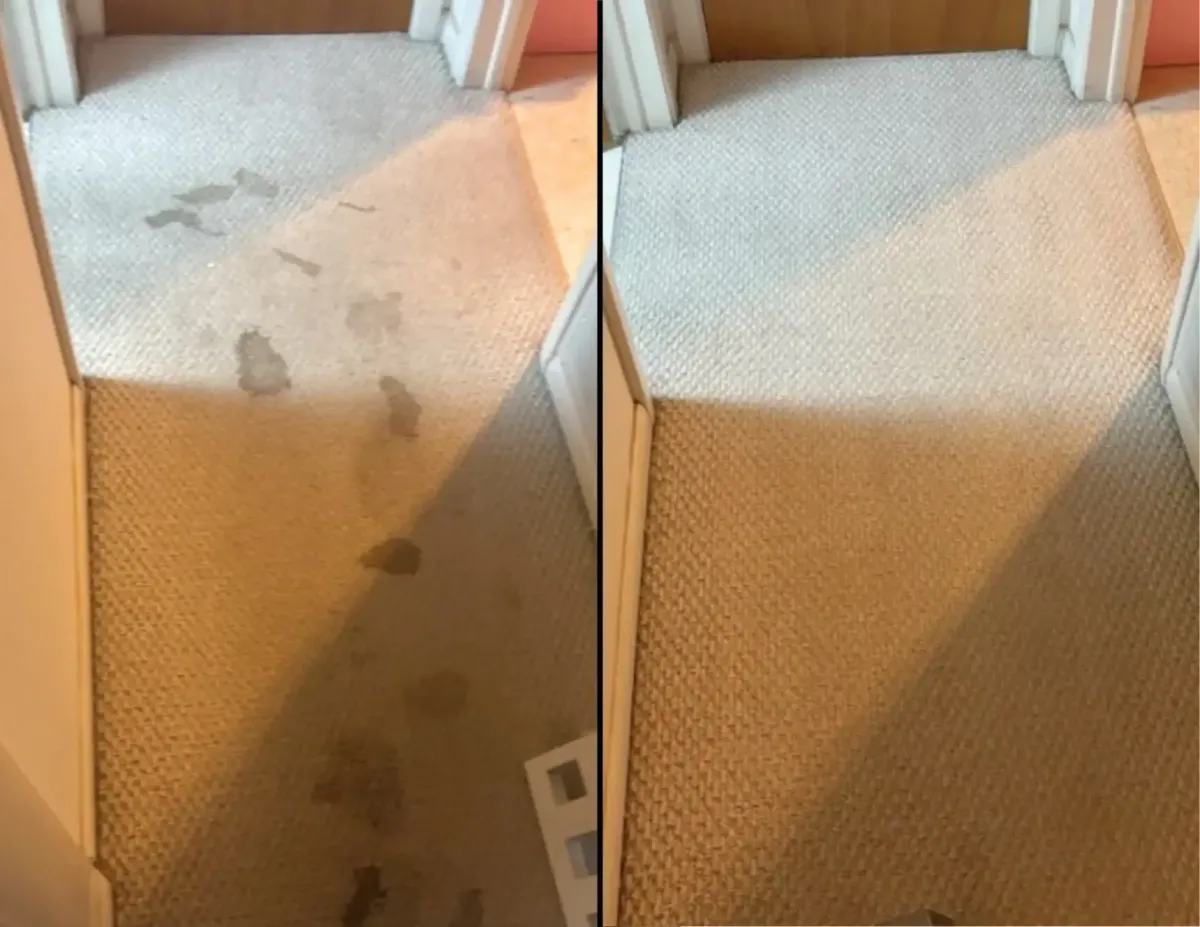
What Red Wine Staining Really Does to Colorado Carpet Fiber
What Red Wine Staining Really Does to Colorado Carpet Fiber
We get at least one or two calls a week for a red wine spill, and almost every one of those calls starts the same way — the homeowner is convinced it's ruined. It's not. Red wine actually comes up 90 to 95% of the time when a professional gets to it, as long as nobody's tried to fix it themselves first. It has an underserved reputation as the "impossible" stain, and the actual chemistry tells a different story.
What's Actually Staining Your Carpet
Red wine's color comes from two main sources: tannins, natural plant compounds extracted from grape skins and seeds during winemaking, and anthocyanin pigments, which give red wine its deep color. Tannins are what make red wine staining look so alarming on contact — they're astringent compounds that bind readily to fibers — but they're also a well-understood category of stain in professional cleaning. Tannin-based stains, which also include coffee, tea, and many fruit juices, respond to an alkaline pre-spray that lifts the tannin compound out of the fiber without needing anything exotic. This isn't a mystery stain. It's a known chemistry category with a known solution.
So Why Does Red Wine Have Such a Bad Reputation?
Almost entirely because of what happens before we ever get the call. The single biggest reason a red wine stain fails to come out is home treatment gone wrong — reaching for OxiClean, club soda, salt, or some other homemade remedy before a professional ever sees it. Some of these home treatments set the tannin permanently into the fiber instead of lifting it, or introduce a second contaminant (like sugar from certain home remedies) that complicates the actual removal. The wine itself isn't the enemy. What gets poured or rubbed on top of it afterward often is.
Why Red Gatorade Is a Completely Different Problem
![[PHOTO PLACEHOLDER: Comparison of red wine stain removal vs. red dye beverage staining on carpet]](https://assets.cdn.filesafe.space/MYF360ivYUNrrmLbTiiA/media/6a1cbab6d7322952d16cd6b0.webp "[PHOTO PLACEHOLDER: Comparison of red wine stain removal vs. red dye beverage staining on carpet]")
This is the contrast that actually surprises people: red wine comes up the majority of the time, but red Gatorade and similar red-dyed drinks almost never fully come out. The reason is completely different chemistry. Red Gatorade's color comes from FD&C Red 40, a synthetic azo dye — and azo dyes don't just sit on top of carpet fiber the way tannins do. They chemically bond directly to the same dye sites in nylon fiber that the carpet's own factory dye occupies. Once that bond forms, you're not lifting a surface stain anymore — you're competing with a dye molecule for the exact same chemical attachment point the carpet manufacturer used to color the fiber in the first place.
Removing an azo dye stain like this requires a reducing agent — sodium metabisulfite is the standard professional choice — which breaks the dye's chemical bond rather than simply lifting a surface stain. Even then, results vary, and there's a real risk of also affecting the carpet's own dye in the treated area, since the same chemistry that breaks the Red 40 bond can also touch the fiber's factory color if it's not applied carefully. That's the honest difference: wine is a lift-and-extract problem, and red dye beverages are a molecular-bonding problem.
StainWhat's Actually StainingHow It Attaches to FiberTypical Removal OutcomeRed wineTannins + anthocyanin pigmentsSurface binding, liftable90-95% full removal, professionally treatedRed Gatorade / red dye drinksFD&C Red 40 (azo dye)Chemically bonds to fiber dye sitesOften incomplete even with professional reducing agents
What to Actually Do the Moment It Happens
Blot, don't rub — rubbing spreads the stain and works it deeper into the fiber. Blot with a clean, dry cloth to remove as much liquid as possible before it has time to set. Then call a professional rather than reaching for a home remedy. The wine sitting on the surface for a little while until a technician arrives is far less risky than a homemade treatment that sets the tannin or introduces a new problem into the fiber.
Color Choice — Why It Matters Even When the Stain Comes Out
Even a successfully removed wine stain can leave the faintest shift in a very light, solid-color carpet if the spill sat for a while before treatment — not a visible stain exactly, but a subtle difference under certain light. Mid-tone or patterned carpet masks that kind of minor variation far better than a solid light color does, which is one more reason we consistently point homeowners toward pattern or fleck in any room where food and drink happen regularly.
Frequently Asked Questions About Red Wine and Carpet Staining
Is it true that red wine stains are impossible to remove?
No — that's a common misconception. Professionally treated red wine stains come up 90 to 95% of the time. The stains that genuinely don't come out are almost always cases where a home remedy was applied first and set the tannin permanently, or where the stain sat untreated for an extended period.
Should I use club soda or salt on a fresh red wine spill?
We'd recommend against it. While these are common household suggestions, they can complicate professional treatment or, in some cases, help set the stain rather than lift it. Blotting with a dry cloth and calling a professional gives the best odds of full removal.
Why can't the same treatment that removes wine also remove red Gatorade stains?
Because they're fundamentally different chemistry. Wine's tannins sit on the fiber surface and respond to an alkaline pre-spray. Red Gatorade's FD&C Red 40 dye chemically bonds to the same dye sites in the fiber that the carpet's own color occupies, requiring a reducing agent to break that bond — and even then, full removal isn't guaranteed the way it is with wine.
A Weekly Reality Across Every City We Serve
This call comes in constantly across our entire service area, but it clusters noticeably around homes with open-concept entertaining spaces — the kind of layout common in newer construction throughout RidgeGate in Lone Tree and Candelas in Arvada, where kitchen, dining, and living areas flow directly onto the same carpet. More entertaining naturally means more spills, and more spills means more of these calls.
If you've got a fresh spill or an old stain you assumed was permanent, call or text (720) 730-8055 for a free assessment, or book online at coloradochoicecarpet.com.
Serving the Front Range:Castle Rock | Highlands Ranch | Castle Pines | Lone Tree | Centennial | Littleton | Parker | Franktown | Sedalia | Larkspur | Monument | Lakewood | Morrison | Wheat Ridge | Arvada | Broomfield | Westminster | Aurora | Englewood | Thornton | Elizabeth | Denver
