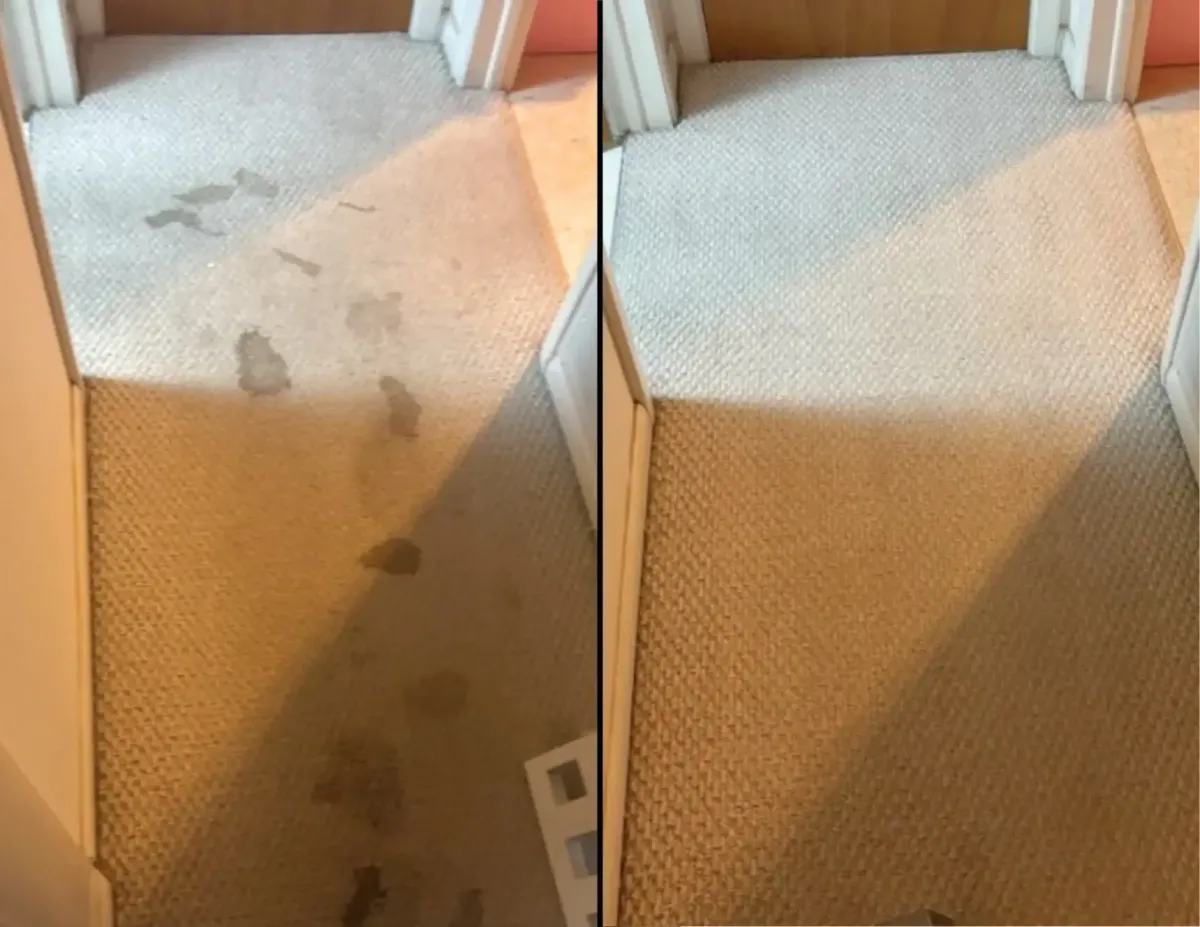
Nylon vs Polyester vs Wool Carpet: Cleaning Guide
Nylon vs Polyester vs Wool Carpet — Why It Changes Everything About Cleaning
"I've got to replace the carpet in this room — what should I get?" We hear that question on almost every job where a customer sees what a fresh cleaning does and starts thinking about their next install. After 23 years of cleaning every fiber type the Front Range has to offer, we have a clear answer, and it's not the one the flooring showroom always leads with.
Our Standard Recommendation, Straight Up
Spend a little more on nylon if the budget allows it. We say this because we see the long-term result, not just the day-one installation — nylon consistently cleans better and comes back to life better after a professional cleaning than any other synthetic fiber. If nylon isn't in the budget, a nylon-polyester blend is a reasonable middle ground. Polyester on its own is, in our opinion, the 24-month carpet — it looks good when it's new and it holds up fine for about two years, but it doesn't have the long-term durability or cleanability that nylon does. It's a legitimate choice if a shorter lifespan is an acceptable tradeoff for the lower price, but it's not what we'd put in our own homes.
Why Does Nylon Clean Better Than Polyester?
Nylon fiber has a resilient structure that resists crushing and matting under foot traffic, and it responds to professional hot water extraction by genuinely springing back — the pile stands back up and the color looks refreshed. Polyester fiber is more prone to permanent matting once traffic patterns set in, and while it holds dye color well when new, it doesn't recover its texture the same way nylon does after repeated cleanings. That's the difference between carpet that looks new for years and carpet that just replaces the top layer of soil each time.
What About Wool?
Wool is a different conversation entirely, because wall-to-wall wool is genuinely rare in our service area — we see it maybe two or three times a year, almost exclusively in premium communities like Castle Pines Village, where higher-end original construction specified it. What we see constantly instead is wool area rugs, which is a completely different job than wall-to-wall wool carpet. When we do get called out to actual wall-to-wall wool, it's treated as a unique job every time — wool requires pH-neutral chemistry exclusively, since anything above neutral pH can permanently damage the fiber, and it takes dye beautifully but reacts poorly to the wrong cleaning chemistry. It's not something we approach the same way twice in a row, simply because we don't see enough of it to run it on autopilot.
The Color Choice Question — What We've Actually Seen Hold Up
![[PHOTO PLACEHOLDER: Mid-tone patterned nylon carpet after professional cleaning, Colorado home]](https://assets.cdn.filesafe.space/MYF360ivYUNrrmLbTiiA/media/6a1cbab6d7322952d16cd6b0.webp "[PHOTO PLACEHOLDER: Mid-tone patterned nylon carpet after professional cleaning, Colorado home]")
Fiber type is half the decision — color is the other half, and it's just as often overlooked. From what we've seen across thousands of jobs, very light solid colors show every soil track and traffic lane almost immediately, and very dark solid colors show lint, dust, and fiber wear (that dulled, "walked-on" look) faster than people expect. Mid-tone colors with some pattern or fleck consistently hide normal soiling and traffic wear the longest between cleanings — not because they get dirty less, but because the color and pattern camouflage it until a professional cleaning is actually due. Homeowners who go with a busy pattern or a mid-tone flecked color tend to be far happier with how their carpet looks between cleanings than homeowners who chose a solid light or solid dark color for the look alone.
Fiber Comparison at a Glance
FiberOur TakeCleaning ResponseTypical LifespanNylonOur top recommendation when budget allowsExcellent — springs back, color refreshesLongest of the syntheticsNylon-Polyester BlendReasonable middle-ground optionGood — better than polyester aloneModeratePolyesterThe "24-month carpet" — fine if that's an acceptable tradeoffFair — dye holds, but matting is more permanentShortest of the syntheticsWoolRare in our service area — 2-3 wall-to-wall jobs a yearExcellent when treated correctly — pH-neutral onlyVery long, if maintained properly
Frequently Asked Questions About Carpet Fiber Choice
If nylon is better, why isn't every carpet made of it?
Cost. Nylon typically costs more per square foot than polyester, and for budget-conscious installs — rental properties, quick flips, short-term ownership plans — polyester's lower upfront price can make sense even with a shorter usable life. It comes down to whether the buyer is optimizing for lowest cost today or lowest cost over the years the carpet is actually in the home.
Does fiber type actually affect how professional cleaning turns out?
Significantly. Nylon fiber recovers its texture and color after hot water extraction in a way polyester generally doesn't once matting has set in. We see this on nearly every job — two carpets with identical soil load and identical cleaning process can look meaningfully different afterward purely because of fiber type.
Why do you treat wool differently than nylon or polyester?
Wool requires pH-neutral chemistry exclusively — anything above neutral pH risks permanently damaging the fiber, which isn't a risk with synthetic fibers. Because wall-to-wall wool is uncommon in our service area, every wool job gets individual attention rather than a standardized process, since consistency of approach matters less than getting the chemistry right for that specific carpet.
What We've Seen Across the Front Range
Fiber choice shows up differently depending on where a home sits in our service area. In Castle Pines Village specifically, we see a noticeably higher concentration of wall-to-wall wool than anywhere else we serve — a reflection of the premium original construction in that community — while the overwhelming majority of homes across Douglas, Arapahoe, and Jefferson County are nylon, polyester, or a blend of the two. That pattern is consistent enough that when we get a wool call, we already have a good guess where it's coming from before we ask.
If you're deciding what to install next, or wondering why your current carpet isn't responding to cleaning the way it used to, call or text (720) 730-8055 for a free assessment, or book online at coloradochoicecarpet.com.
Serving the Front Range:Castle Rock | Highlands Ranch | Castle Pines | Lone Tree | Centennial | Littleton | Parker | Franktown | Sedalia | Larkspur | Monument | Lakewood | Morrison | Wheat Ridge | Arvada | Broomfield | Westminster | Aurora | Englewood | Thornton | Elizabeth | Denver
