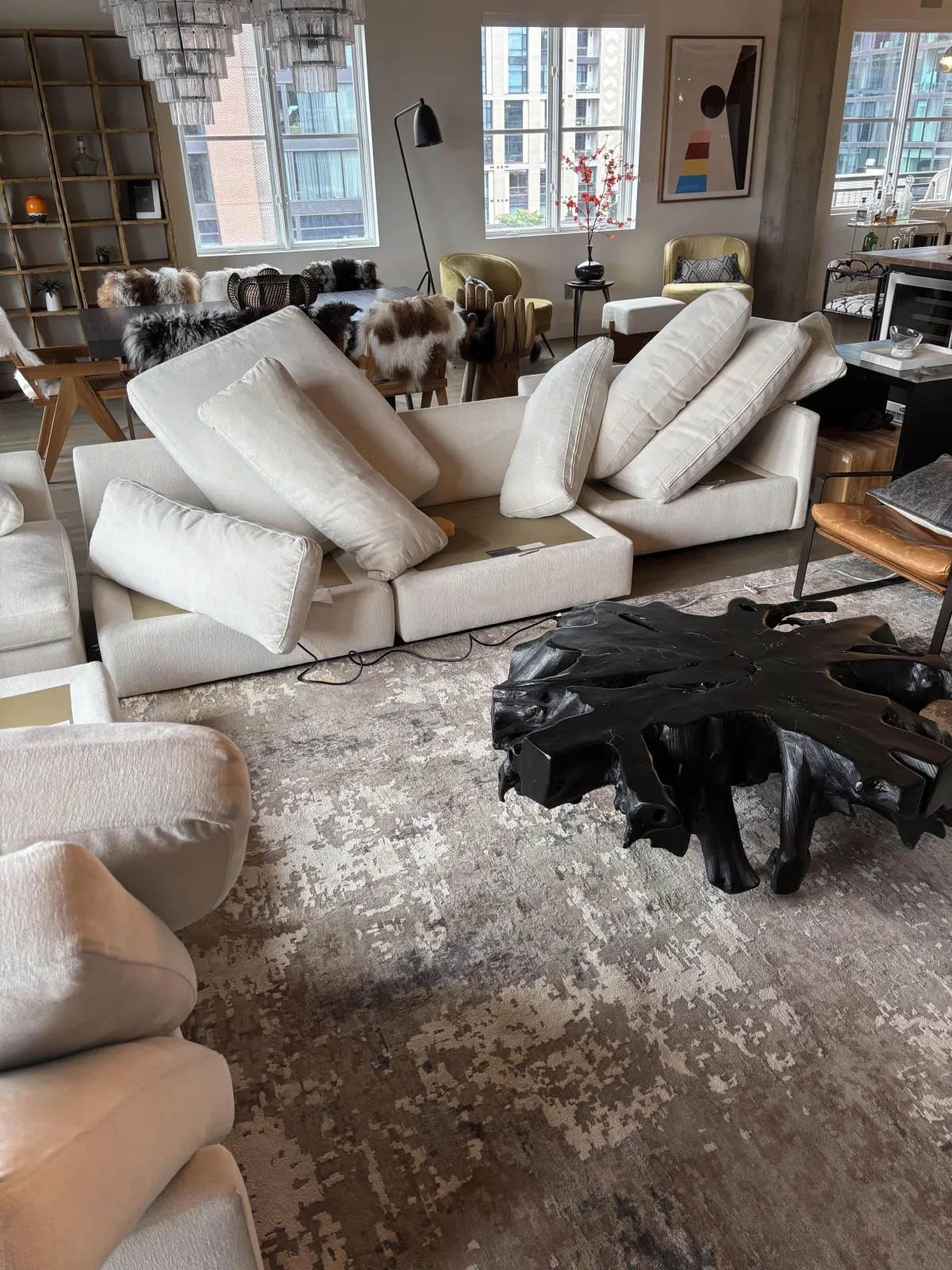
Why Cleaning a Custom W/S Fabric Sofa in Lakewood Takes More Than a Machine
BLUF: A custom handmade sofa found on Facebook Marketplace arrived in an Applewood, Lakewood home with no care tag and a demanding W/S fabric code. No tag means no shortcuts — here's what IICRC UFT-certified hand extraction actually required to clean it safely. Three pieces cleaned, $150–$200.
A Marketplace Find With No Care Label
The homeowner in Applewood — one of Lakewood's most established 1950s and 1960s neighborhoods — had found a custom, handmade sofa through a Facebook Marketplace listing. It was well-built and clearly a good piece, but it arrived with no manufacturer's fabric code tag at all. That absence changes everything about how a job like this has to start.
Why "No Tag" Means Starting From Zero
Every piece of upholstery fabric is manufactured with a code — W (water-safe), S (solvent-only), W/S (either method), or X (vacuum only, no liquid). Without a legible tag, a technician has to determine fabric behavior through direct testing rather than trusting a label. Applying water-based chemistry to what turns out to be an S-coded fabric causes shrinkage and permanent color bleed. Applying nothing but dry solvent to a W-coded fabric leaves soil and body oils behind that only water-based extraction fully removes. Guessing wrong in either direction damages the piece — and on a custom, handmade sofa with no manufacturer to fall back on for warranty or replacement fabric, there's no room for a mistake.
What Determined This Was a W/S Fabric
A hidden-area moisture test on the underside of a cushion confirmed the fiber tolerated water without bleeding or texture change — meaning this piece was W/S: either method is safe, and the choice comes down to matching the specific soil type present. General household soil and body oils responded best to a moisture-controlled, water-based pass rather than dry solvent alone.
The Hand-Extraction Process
Custom upholstery without a manufacturer's care history gets treated the way any high-value, unlabeled piece should — by hand, not by running a standard machine pass across it blind:
Fiber and weave assessment — confirming pile direction and weave tightness before any chemistry touches the fabric
Spot moisture testing — on a hidden area, before treating any visible surface
pH-matched pre-treatment — applied lightly, no saturation
Low-moisture hand extraction — controlled pass with a detail-grade tool, not a wide machine head that can't adjust to fabric texture changes across the piece
Pile reset and controlled drying — final grooming pass before the piece is left to dry
Why This Matters for Lakewood's Older Neighborhoods
Applewood, Bear Creek, and Lakewood Estates carry a higher share of older, inherited, or secondhand furniture than newer Lakewood developments — pieces bought decades ago, reupholstered without a new tag, or picked up through resale the way this sofa was. Upholstery cleaning in Lakewood that assumes every piece has a legible, trustworthy tag will eventually damage something in one of these homes. Testing first isn't extra caution for its own sake — it's the step that determines whether the piece survives the cleaning.
Results
All three pieces from this Applewood home — the sofa and two matching chairs — came through with no shrinkage, no color change, and no texture damage. Total cost across all three: $150–$200, in line with standard Lakewood upholstery cleaning pricing, with no upcharge for the custom fabric assessment.
If you have upholstery in Lakewood without a legible care tag — inherited, reupholstered, or secondhand — contact Colorado Choice Carpet Cleaning at (720) 730-8055. We test before we treat, every time. For more on choosing a carpet and upholstery cleaner in Lakewood, see our full comparison of Lakewood carpet cleaning options and our 7 questions to ask before you book.
